Short answer
Bengali food is the cuisine of Bengal, the region split between Bangladesh and the Indian state of West Bengal. It is built on rice, fish, mustard, chilli and fresh herbs, with a large street snack tradition and a famous sweet course.
Bengali food is the cuisine of Bengal, a region now divided between Bangladesh and the Indian state of West Bengal. It is built on rice, freshwater fish, mustard, chilli and fresh herbs, and it is known for fried snacks, street chaat and a long list of milk sweets.
What is Bengali food?
Bengali food is the home and street cooking of the Bengali people, who live mainly in Bangladesh and West Bengal. Rice is the staple, fish is the favourite protein, and mustard in both oil and paste form gives many dishes their sharp, pungent edge.
The cuisine is often described as a meal of courses. Bitter vegetable dishes come first, followed by dal, fried vegetables, fish or meat curries, chutney and finally sweets. Not every household eats this way every day, but the structure shapes how Bengali menus are written.
Bengal’s cooking also shows the influence of trade and rule over many centuries, which is why Persian, Mughal and British dishes sit beside older river-delta cooking. Exactly how much each contributed to a given dish is often debated.
What flavours define Bengali cooking?
Bengali cooking is defined by mustard oil, mustard seeds and paste, panch phoron, green chilli, turmeric, tamarind and fresh coriander. Many dishes are a balance of pungent, sour, sweet and hot.
- Mustard oil: used for frying and for raw dressing, with a sharp smell that mellows when heated.
- Panch phoron: a five seed blend of fenugreek, nigella, cumin, black mustard and fennel.
- Green chilli: used raw, whole or crushed, often more for fragrance than for heat.
- Tamarind: the sour base of snacks such as fuchka and chot poti.
- Jaggery and sugar: used in sweets and in some savoury sauces.
- Shallots and garlic: pounded into mashed sides called borta.
What are the main Bengali dishes?
The main Bengali dishes include fish curry with rice, dal, vegetable dishes, bhuna meat curries, biryani and pitha rice cakes. Which dishes are served varies by region, season and occasion.
| Dish | What it is | Typical form |
|---|---|---|
| Shorshe ilish | Hilsa fish in mustard sauce | Fish curry with rice |
| Shukto | Mixed vegetables with a lightly bitter edge | Starter vegetable dish |
| Khichuri | Rice and lentils cooked together | Comfort dish, often eaten in rain |
| Bhuna | Meat cooked down in spices until thick | Beef, lamb or chicken curry |
| Luchi | Small puffed fried white flour bread | Eaten with potato curry |
| Pitha | Rice flour cakes, steamed, fried or filled | Winter sweet or savoury cakes |
What is Bengali street food?
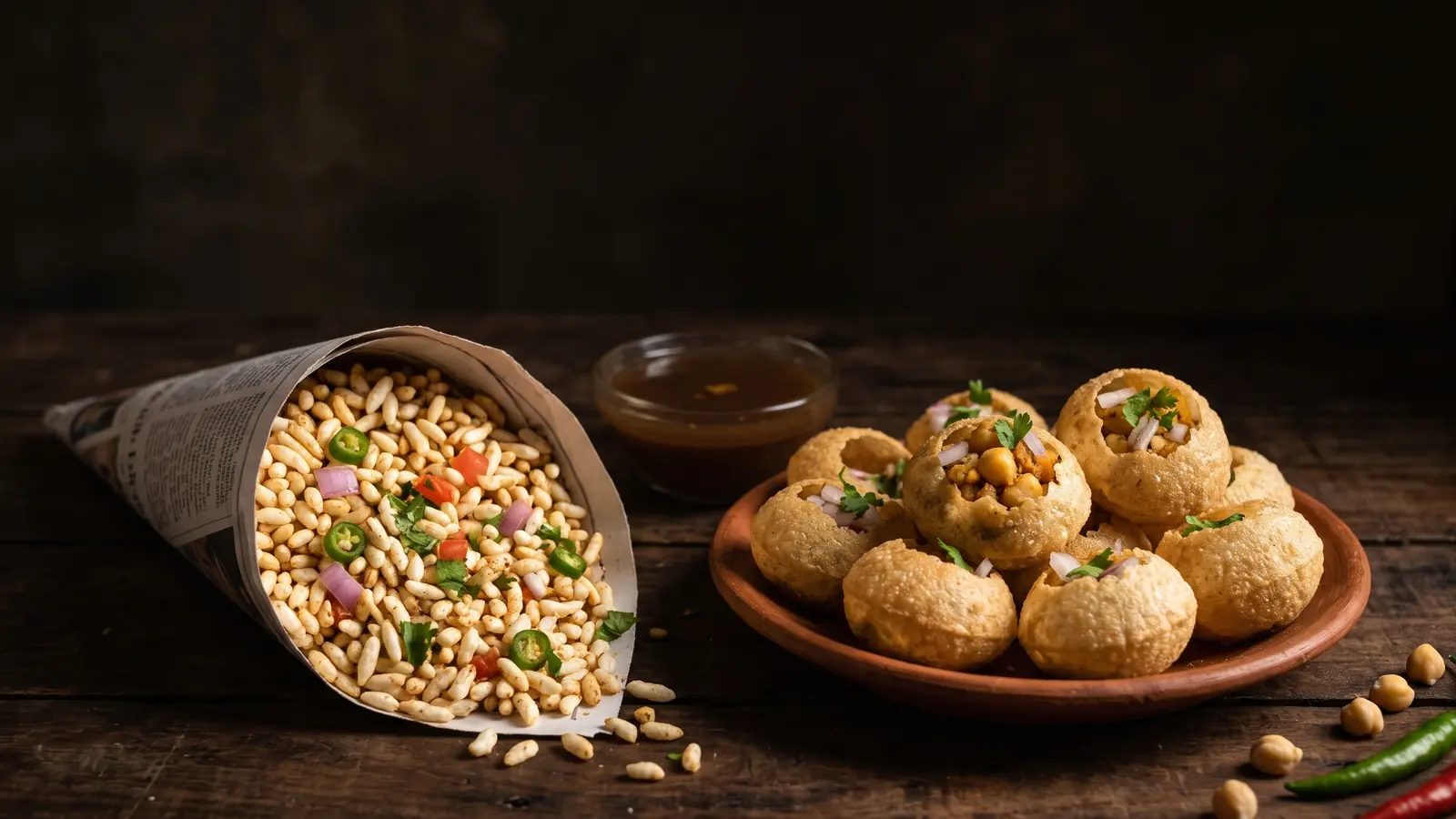
Bengali street food is a group of small, sharp, crunchy snacks sold from carts, stalls and counters, usually combining something crisp with tamarind, chilli, onion and lime. The best known are jhal muri, fuchka, chop, singara and various fritters called bora or piyaju.
Street food is eaten between meals and in the evening, often in paper cones or on leaf plates. The textures matter as much as the flavours: crisp shells against soft chickpeas, crunchy puffed rice against soft onion.
Common Bengali street snacks include:
- Jhal muri: puffed rice mixed with onion, chilli, mustard oil and lime.
- Fuchka: hollow crisp shells filled and dipped in tamarind water.
- Chot poti: yellow peas and potato in sweet and sour tamarind sauce.
- Singara: the Bengali form of the samosa, usually with potato filling.
- Begun bora and dali bora: aubergine and lentil fritters.
How is Bengali food different from other Indian food?
Bengali food differs from much northern Indian food by using mustard oil more than ghee, cooking more fish and rice, and using less cream and fewer heavy tomato gravies. Panch phoron replaces the garam masala base common elsewhere.
The comparison with Punjabi cooking is the clearest. Punjabi menus lean on wheat breads, tandoor meat and cream or tomato sauces. Bengali menus lean on rice, fish, mustard and lighter sauces. Both traditions exist within British curry house menus, though the Bengali side is less well known by name.
What sweets are Bengali?
Bengali sweets, called mishti, are milk-based sweets made from curdled milk, reduced milk, sugar and jaggery. Rasgulla, sandesh, mishti doi and kheer are the best known.
The origin of rasgulla is disputed between West Bengal and Odisha, and both states have official recognition claims, so it is best described as a regional sweet rather than credited to one place. Mishti doi, sweetened set yoghurt, is a Bengali specialty usually made with jaggery or sugar.
Which Bengali food is on the Dhoompan menu?
Dhoompan is a Bangladeshi street food and tandoor restaurant at 47 Trinity Road in Tooting Bec, London, and its recorded menu includes a good share of the Bengali snacks above.
According to the menu notes, the snacks list has Jhal Muri, Chot Poti, Far Far (crisp fried wheat crackers) and What the Fuchka (the menu spells it with punctuation), listed at £8. Borta, the mashed sides, appear as Borta/Satnis. Fritters include Begun Bora, Dali Bora and Pickled Onion Piyaju, and the sweets list has Mishti Dhoi, Kheer, Gulab Jam and Gajorer Halwa.
Dhoompan also cooks tandoor dishes, which are more closely linked with Punjabi and British curry house cooking than with traditional Bengali homes. Full details are on the menu page, and opening times are on the hours and location page. Prices and availability change, so check with the restaurant.
How do you start trying Bengali food?
The easiest start is a few small snacks, one fried item, one rice or bread dish and a sweet. A sample order gives a feel for the sour, hot, crunchy and sweet sides of the cuisine without committing to one heavy curry.
- Start with a crunchy snack such as jhal muri or fuchka.
- Add a fritter, for example aubergine or lentil.
- Choose one main, either a bhuna style curry or a grilled dish.
- Add plain rice or flatbread to balance the heat.
- Finish with mishti dhoi or kheer.
Tell the staff about any allergies, since mustard, nuts and dairy appear in many dishes. Ask for less chilli if you are unsure, as the heat levels vary.
Common questions
Is Bengali food the same as Indian food?
No. Bengali food is a regional cuisine. West Bengal is part of India and Bangladesh is a separate country, and both cook Bengali dishes. It differs from other Indian regions in its use of mustard oil, river fish and rice as the base.
Is Bengali food always spicy?
Not always. Chilli is common, but many Bengali dishes are mild and rely on mustard, panch phoron and sweetness. Street snacks and pickles tend to be the hottest, and you can usually ask for less chilli.
What is panch phoron?
Panch phoron is a Bengali blend of five whole seeds, usually fenugreek, nigella, cumin, black mustard and fennel. It is fried in hot oil at the start of cooking to flavour dals and vegetables.
What is the national dish of Bangladesh?
Rice with fish is widely called the national pairing, and hilsa, known as ilish, is the national fish. Bangladesh has no single officially named dish that every source agrees on.
What do Bengalis eat for dessert?
Bengali sweets, called mishti, are based on milk, sugar and jaggery. Common ones are rasgulla, sandesh, mishti doi (sweet set yoghurt), kheer and gulab jamun, often eaten at the end of a meal.
Everything practical is on the home page: Dhoompan hours, menu and directions.
This article is general information from an independent guide, not from Dhoompan itself. For the store’s current details see hours and location.